Like everywhere else, we have cookies, too


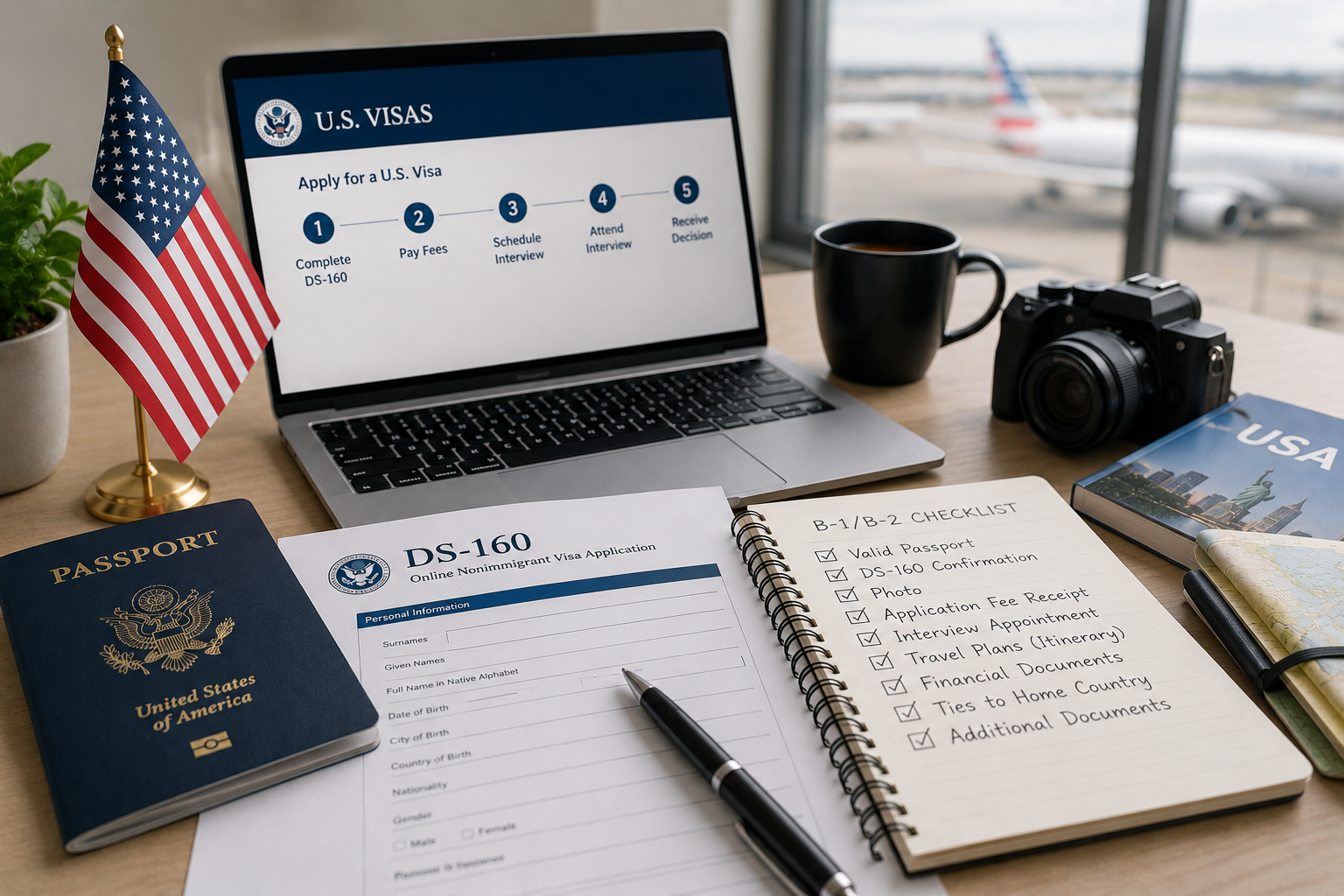
A B1/B2 visa is a temporary nonimmigrant visa that allows foreign nationals to travel to the United States for business (B1), tourism (B2), or a combination of both purposes.
A tourist visa may be used for vacations, visiting friends or relatives, receiving certain medical treatment, attending social events, or participating in other activities permitted under B1/B2 status.
However, obtaining a U.S. tourist visa involves more than simply completing an application form. The applicant must demonstrate that they qualify for a temporary visa and intend to leave the United States after their authorized stay.
The application process generally begins with completing Form DS-160 — Online Nonimmigrant Visa Application.
The DS-160 requests detailed information about the applicant, including:
It is important to complete the DS-160 carefully and accurately.
Information provided in the application may also be relevant in future U.S. immigration processes. For this reason, applicants should save a complete copy of their DS-160 and keep it with their immigration records.
After completing the DS-160, the applicant generally needs to follow the instructions of the U.S. Embassy or Consulate where they plan to apply, pay the applicable visa application fee, and schedule an interview if one is required.
Procedures may differ depending on the country and U.S. consular post.
Applicants should always check the current instructions for the specific U.S. Embassy or Consulate where they intend to apply.
The visa interview is an important part of the B1/B2 application process.
A consular officer may ask questions about:
The applicant should be prepared to explain their circumstances clearly and consistently with the information provided in the DS-160.
There is no single universal package of supporting documents that guarantees approval of a tourist visa.
Depending on the applicant’s individual circumstances, supporting documents may relate to employment, business, finances, family circumstances, travel plans, previous travel history, or other relevant factors.
The purpose of supporting documentation is not simply to submit as many documents as possible. Documents should be relevant to the applicant’s circumstances and consistent with the information provided in the application.
One of the key issues in a B1/B2 application is the temporary nature of the intended trip.
Under U.S. immigration law, most B visa applicants are presumed to be immigrants until they establish that they qualify for nonimmigrant status.
For this reason, the consular officer evaluates the applicant’s individual circumstances and whether the applicant has demonstrated eligibility for the requested visa.
Having an invitation from someone in the United States, property, employment, money in a bank account, or previous international travel does not automatically guarantee visa approval.
Likewise, there is no document or combination of documents that can guarantee that a visa will be issued.
Applicants should avoid providing inaccurate or inconsistent information, hiding relevant facts, or preparing answers simply because they believe those answers are what the consular officer wants to hear.
Information in the DS-160 and information provided during the interview should be truthful and consistent.
It is also important to remember that another person’s successful visa application does not mean that the same strategy or documents will work for you. Every application is evaluated based on the individual applicant’s circumstances.
A B1/B2 visa allows a person to travel to a U.S. port of entry and request admission.
The visa itself does not guarantee entry into the United States.
The final decision regarding admission is made by U.S. Customs and Border Protection (CBP) at the port of entry.
If admitted, the traveler should check their I-94 record, which indicates the authorized period of stay in the United States.
If you would like to prepare and submit your B1/B2 tourist visa application independently, we have created a step-by-step webinar that guides you through the entire process.
The webinar will help you understand how to:
You will also receive support in our Telegram group throughout the process, so you can ask questions as you work through the application.
The goal is to give you a clear understanding of the process and the tools you need to prepare your application independently and confidently.
Important: We are not attorneys and do not provide legal advice. Our services are limited to immigration form preparation, document preparation, informational assistance, and administrative support. Visa issuance is determined exclusively by the U.S. Department of State.
The IRS (Internal Revenue Service) is the US Internal Revenue Service responsible for tax collection and tax codes.
This year, the IRS begins accepting 2022 tax returns on January 24, 2023.
Tax returns must be filed (or you must file a tax extension form):
If you are unable to file your return by the due date, you can request an extension until October 15, 2023, however, this does not release you from the obligation to pay taxes by the due date.
Filing a tax return is not just a formality, it is a legal obligation of every US citizen and resident who receives income. The declaration must indicate all income for the previous year, including salary, interest on deposits, investment income, etc. It is also necessary to indicate in the declaration all possible tax deductions that can reduce the amount of tax debt.
Failure to comply with the deadlines for filing a tax return or non-payment of taxes can lead to fines and even criminal liability. Therefore, it is important to comply with all tax requirements and file your tax return on time.
If you are not sure about the correctness of filling out the tax return or you have any questions, then you can always contact me.

