Like everywhere else, we have cookies, too


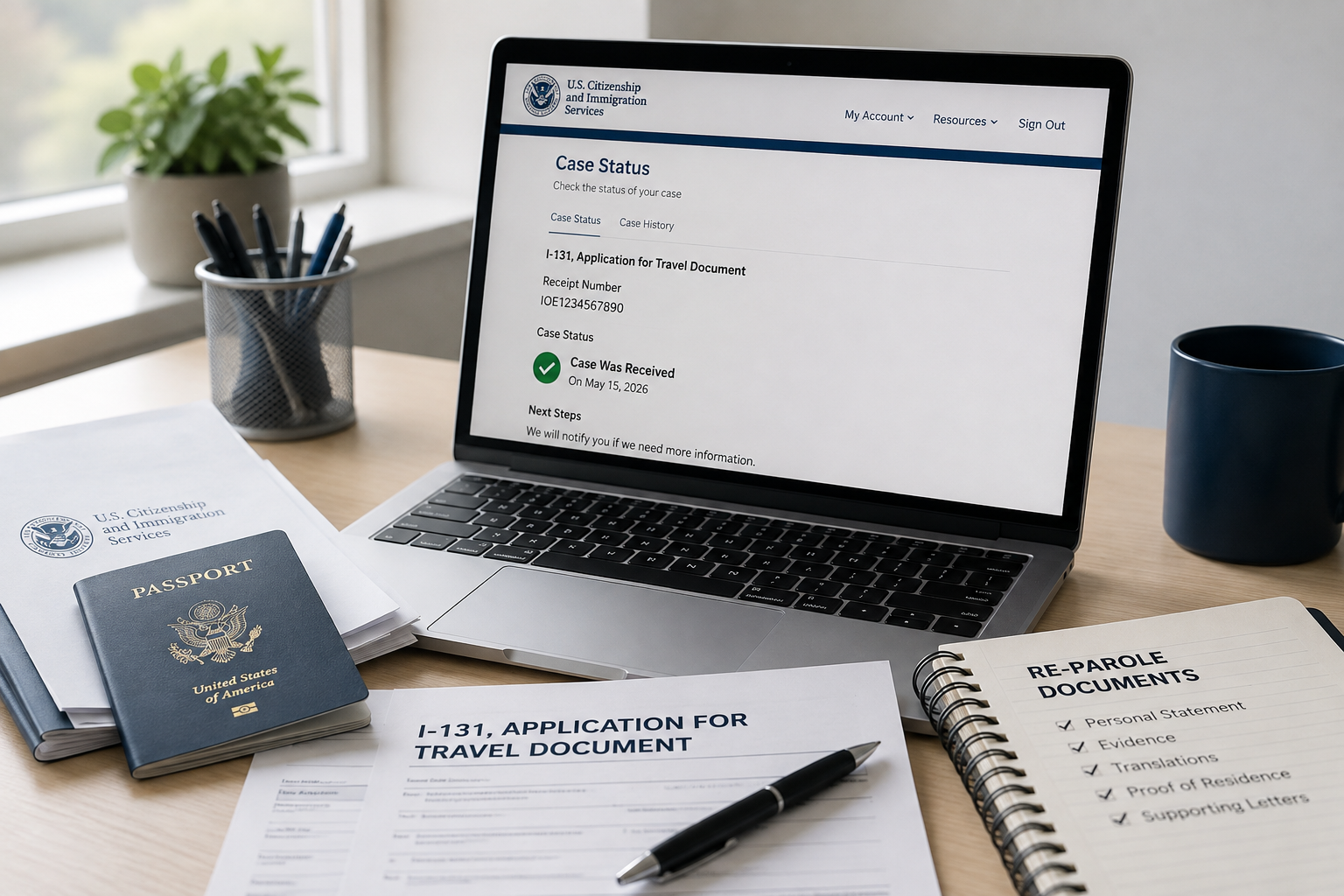
Filing a request for a new period of humanitarian parole is only the beginning of the process. After Form I-131 is submitted, USCIS begins processing and reviewing the case.
It is important to regularly check your USCIS online account, mail, and notices related to your case because USCIS may require action from you at different stages of the process.
After USCIS accepts the application, it issues a Receipt Notice — Form I-797C, Notice of Action.
The notice contains your Receipt Number, which can be used to track the status of your case.
If your case is connected to your USCIS online account, information and notices related to the case may also appear there.
A Receipt Notice confirms that USCIS received the application. It does not mean that Re-Parole has been approved.
Keep the Receipt Notice with a complete copy of your application and supporting evidence.
Another stage of the process involves biometrics.
USCIS may schedule a Biometrics Appointment at an Application Support Center (ASC), or USCIS may determine that previously collected biometric information can be reused.
If USCIS schedules an appointment, carefully review the notice for the date, time, location, and instructions.
Follow the instructions provided specifically for your case.
USCIS reviews the application and the supporting evidence submitted with it.
If USCIS determines that additional information or evidence is necessary to make a decision, it may issue a Request for Evidence (RFE).
The RFE will explain what additional evidence USCIS is requesting and provide instructions and a deadline for submitting the response.
The response should address the specific issues raised in the RFE and must be submitted according to the instructions and deadline provided by USCIS.
Importantly, an RFE is not a required stage in every case.
Applicants should not assume that USCIS will always provide an opportunity to submit missing evidence later. Depending on the circumstances and applicable USCIS policy, a decision may be made based on the record already before the agency.
For this reason, it is important to prepare the initial application and supporting evidence as completely and carefully as possible rather than relying on the possibility of receiving an RFE.
If USCIS conditionally approves the Re-Parole request, the applicant receives a Conditional Approval Notice.
It is important to understand that Conditional Approval is not yet the final grant of a new period of parole.
At this stage, carefully review the entire notice and follow the instructions provided by USCIS.
The applicant must pay the required $1,020 parole fee within the timeframe specified in the Conditional Approval Notice.
The deadline in the notice is important.
Failure to complete the required action and submit the payment in accordance with USCIS instructions within the specified timeframe can result in denial of the Re-Parole request.
After the required fee is paid and the instructions in the Conditional Approval Notice are satisfied, USCIS continues processing the case toward a final decision.
After the necessary steps have been completed, USCIS makes a final decision on the request.
If a new period of parole is granted, carefully review the official USCIS notice and the dates of the new parole period.
Do not rely only on intermediate case-status updates. The official USCIS decision and documents issued in your individual case are what matter.
Keep the final notice and other case documents for your records, as they may be needed in connection with future immigration filings.
While the application is being processed, regularly:
It is also a good idea to maintain a separate folder containing:
The processing of individual Re-Parole cases may differ. Not every applicant receives an RFE, and USCIS may reuse previously collected biometrics rather than schedule a new appointment.
Conditional Approval should also be distinguished from final approval. Receiving a Conditional Approval Notice does not mean that a new period of parole has already been granted. The applicant must follow the instructions in the notice, including payment of the required fee within the timeframe specified by USCIS.
Finally, filing a Re-Parole request does not by itself automatically extend your current period of parole and does not constitute approval of a new period of parole.
Always follow the official USCIS notices and instructions issued specifically in your case.

